
This is the third story from Health on the Margins, a limited investigative series exploring the region’s fragile healthcare systems.
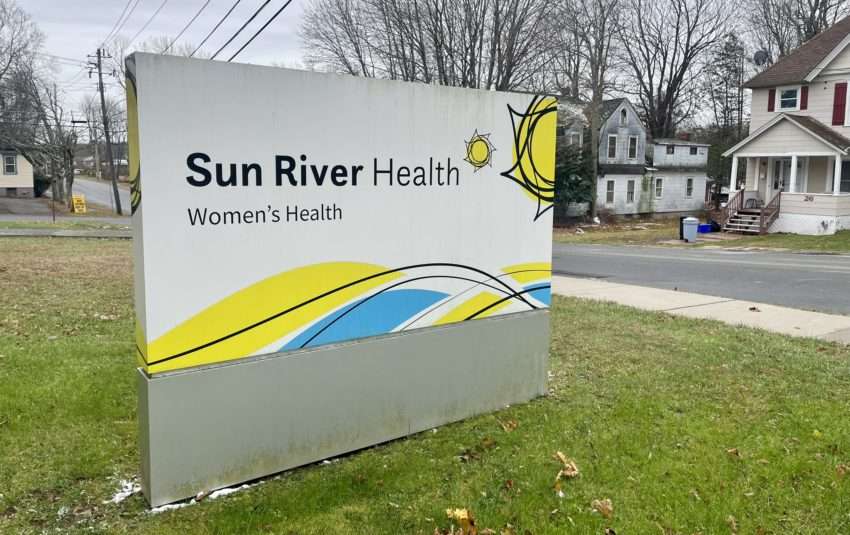
Down Lakewood Avenue in Monticello is Sun River Health’s Women’s Health Clinic, one of two health providers in Sullivan County with routine OB-GYN doctors.
The health provider employs two medical doctors, a midwife, and a nurse practitioner to provide STI screenings, low-risk obstetrical care, and preventive diagnosis and treatment for roughly 150 patients five days a week.
But sometimes, there simply aren’t enough providers to care for patients. Sherry Wyckoff, Sun River Health’s Vice President of Operations, said their doctors are often pulled to other hospitals in their network due to regional staffing shortages.
“It limits what services we can offer here on a particular day, depending on the need,” said Wyckoff.
What medical equipment is available is also limited. Ultrasound screenings and other specialty care are typically rerouted to Garnet Health or other hospitals, sometimes outside of Sullivan County.
Lack of rural transit options makes accessing such out-of-county services increasingly difficult. Move Sullivan – Sullivan County’s free public transportation buses – don’t have daily routes to neighboring counties or most of Sullivan County’s western corridor.
“They won’t take you to Middletown, for instance, where there [are] more hospitals. It’s really hard here in regards to transportation,” said Giselle Posada, Sun River Health’s operations manager.
A March of Dimes study found that residents in Sullivan, Orange, Ulster, and Wayne counties travel between 11 to 15 miles to reach their closest birthing hospital – about twice the state average. In Delaware County, the average distance is more than 41 miles.
Under President Trump’s Medicaid changes, healthcare providers worry that women’s health services will grow even farther from one another – and slimmer.
Sun River Health anticipates that about 20,000 of its patients will lose coverage under Trump’s new work requirements for Medicaid eligibility, leaving thousands of rural residents in dire circumstances.
“We’ll see an increased rate of unplanned pregnancies. We may have people walking around with undiagnosed [and] untreated STIs,” said Sun River Health’s OB-GYN Dr. Patrina Phillip-King. “It’s gonna add more to our health system, more to the cost of delivering care to our patients.”
Decades of clinic closures, consolidations, and service cuts
For residents in the Catskills and northeast Pennsylvania, reproductive health services have been disappearing for a while, part of a national trend.
According to a Center for Healthcare Quality & Payment Reform study, more than 100 rural hospitals across the country have closed their labor and delivery units since 2020.
Since the early 2000s, a series of hospital affiliations and mergers left the county’s community general hospital rebranded: first as Catskill Regional Medical Center in 2001, then as Garnet Health in 2020.
In the following years, Garnet Health stopped providing routine OB-GYN, rheumatology, and pediatric care in Monticello, Harris, and Middletown. The health provider also laid off 42 employees and cut critical outpatient services in June, citing ongoing financial strains. Some Sullivan County residents have urged that declining services have left them wondering if the region is right for them and their families.
The only Planned Parenthood in Sullivan County closed in 2020. The next closest Planned Parenthood clinic in Goshen closed four years later, along with three other upstate locations. The closest Planned Parenthood to Sullivan County still open is in Newburgh. For Wayne and Pike counties in Pennsylvania, the nearest location is Wilkes-Barre, an hour’s drive from Honesdale.
Hospital consolidation is one driver for the loss of women’s health services nationwide, says healthcare advocate Lois Uttley.
“Executives of the health system sitting in their ivory tower will look down and say, ‘wow, we have six maternity units. Maybe we don’t need six. Let’s close two of them, right?’” said Uttley. “Unfortunately [this] forces, in this case, pregnant people to have to travel long distances to give birth.”
In October, Garnet Health announced an intent to pursue an affiliation with Montefiore Health System. Garnet Health Medical Center – Catskills CEO Jerry Dunlavey told Radio Catskill that the affiliation strengthens Garnet Health’s long-term goal of building a new replacement hospital in the county and improving physician recruitment.
Uttley and other advocates warn that hospital mergers, specifically Catholic-run mergers, have impacted the availability of reproductive healthcare across New York state. Governed by Catholic Healthcare Services, these hospitals abide by ethical and religious directives which are issued by the U.S. Conference of Catholic Bishops and ban abortion procedures, reproductive technology like IVF, and contraception.
Amid chronic disinvestment, a myriad of solutions show promise
Sun River Health remains Sullivan County’s only Title X clinic, a federally funded clinic offering family planning services for patients who are low-income or uninsured.
Dr. Patrina Phillip-King said that creative solutions like telehealth services have made it much easier for patients to access follow-up care.
“Even though the patient may have to travel out of town [or] out of county to see the specialty doctor, we can probably get to see that patient much faster with telehealth services to follow up and to ensure that that care plan is being followed,” said King. “Remember, we have to care for mom and the baby.”
Uttley and other health advocates have focused on policy changes, such as the Local Input for Community Healthcare Act. The legislation would require New York’s general hospitals to hold public hearings so residents can comment on how their healthcare would be affected by maternity, mental health, or substance use unit closures.
“It’s local people who would be able to say how could the closure of a hospital be mitigated in some way,” said Uttley. She added that older adults, women, low-income residents, and people with disabilities would have the hardest time finding another provider.
The bill passed the state legislature in June and is waiting to be signed by New York Governor Kathy Hochul.
Investments in primary care are another solution philanthropists are looking to. Ali Foti, program officer at the New York Health Foundation, said that bolstering primary care delivers better health outcomes and saves taxpayers’ costs: “a win-win,” she says.
But with Trump’s Medicaid cuts in motion, it limits what’s possible for the foundation’s partners. Foti said one of their grantees has already had to hit pause on opening a primary care hub in Delaware County.
“It’s just one example of progress being thwarted by federal policy changes,” said Foti.
At Sun River Health, Allison Dubois argues that creative solutions can only do so much: federal cuts still jeopardize its already strained healthcare system. Clinician shortages have persisted for years, at times forcing the clinic to scale back operating hours.
“There’s a real commitment to partnership and innovation, but that doesn’t negate the need to ensure that there are appropriate resources to support what we’re doing.”
Image: Exterior of Sun River Health Women’s Health Clinic in Monticello, N.Y. (Photo Credit: Kimberly Izar)